11. I studied TRUMP and MELANIA after the fact
A retrospective question expanded into hundreds of contracts and a failed continuation test.
Investing on my own · Part 11/22 · Evidence through 2026-09-22. Historical research is distinct from DRY and live execution.
Large moves in coins such as TRUMP and MELANIA make it tempting to search for a rule afterward. Could I have followed the initial rise? Would shorting after the excitement faded have worked better?
This is not a story about catching those moves in advance. I studied them after the events, asking whether a repeatable trading rule could be built around similar behavior. That starting point matters because the examples were already famous when I chose them.
🚀 Two famous coins were not a valid universe
TRUMP and MELANIA were useful prompts for the question. They were not a sufficient test sample. Selecting only memorable winners would omit coins that attracted similar attention and then quietly failed.
I expanded the evaluation to contracts available at the relevant historical times. In the broader September study, 705 of 748 frozen products generated candidate signals. The task became substantially different from explaining two attractive charts.
A representative trigger required a rise of at least 10% in 30 minutes and an outperformance of Bitcoin by at least five percentage points over the same interval. This attempted to distinguish an asset-specific surge from a general market rally.
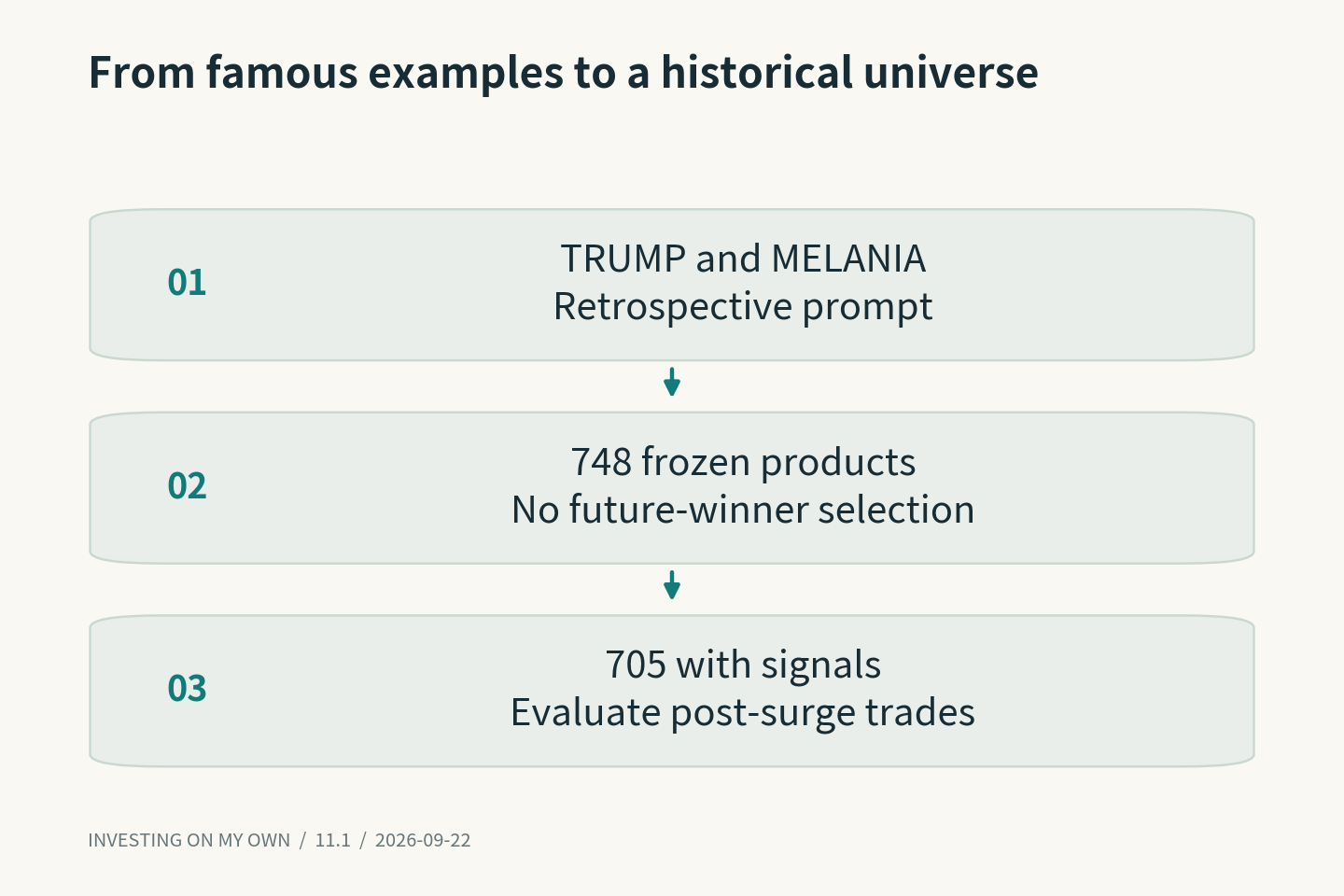
I examined both continuation buys and shorts after sharp rises. Variations included a weaker 5% trigger, 30- and 60-minute delays, flow-related indicators, and fixed or dynamic exits. The expanded work compared 460 entry–exit combinations and another 80 dynamic-exit configurations.
That scale did not automatically make the evidence stronger. Searching more rules also made it easier to find an appealing result by chance. I needed to retain the final selection decision, including the possibility that no candidate deserved selection.
📊 Detecting excitement was not enough
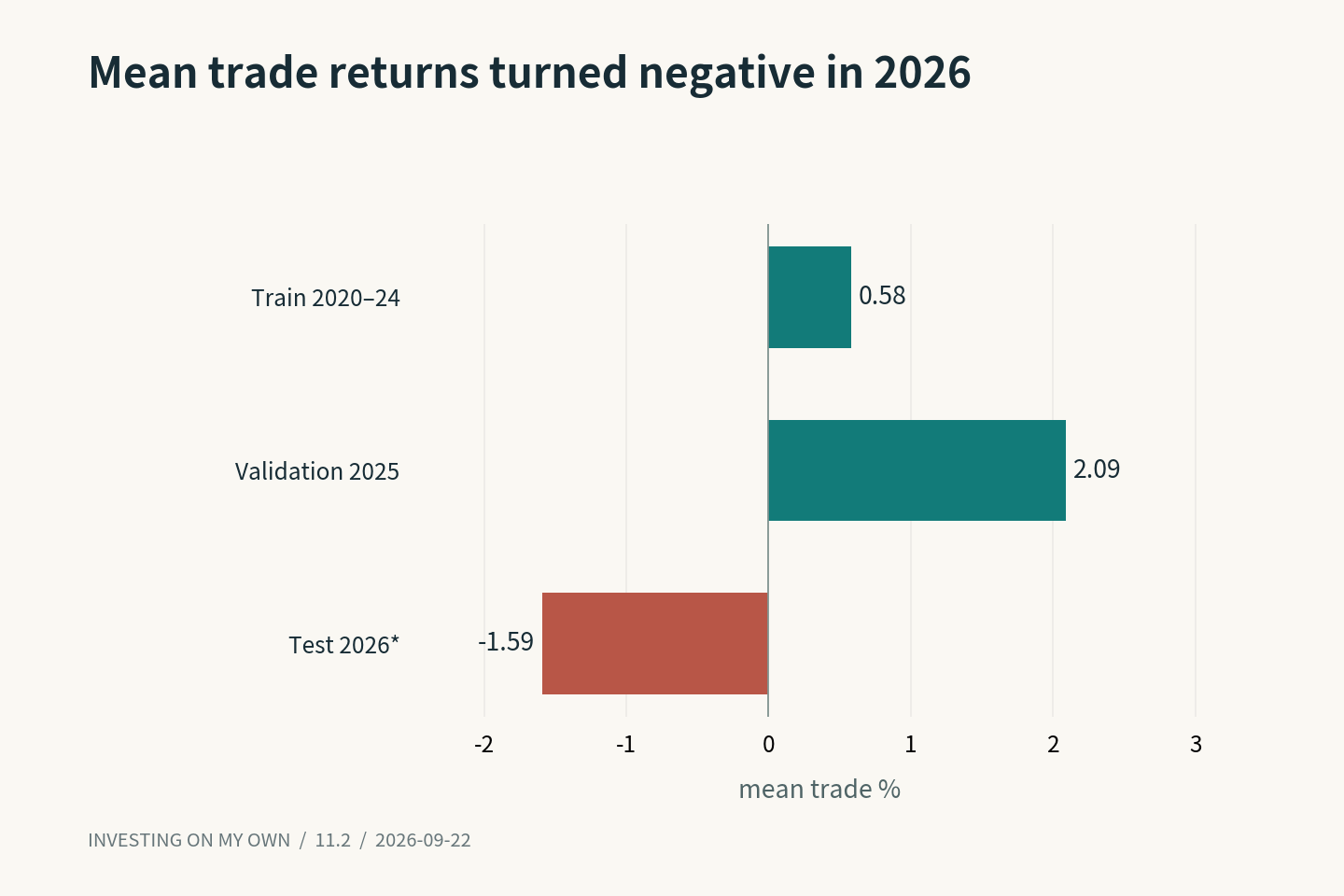
For a representative boom-family result, the 2020–2024 training period contained 3,471 trades, with a mean return of positive 0.58% and a profit factor of 1.09. Profit factor divides total gains from winning trades by total losses from losing trades.
Validation in 2025 looked better: 2,792 trades, a positive 2.09% mean return, and a profit factor of 1.23. The test through June 19, 2026 went the other way: 1,596 trades, a negative 1.59% mean, and a profit factor of 0.84.
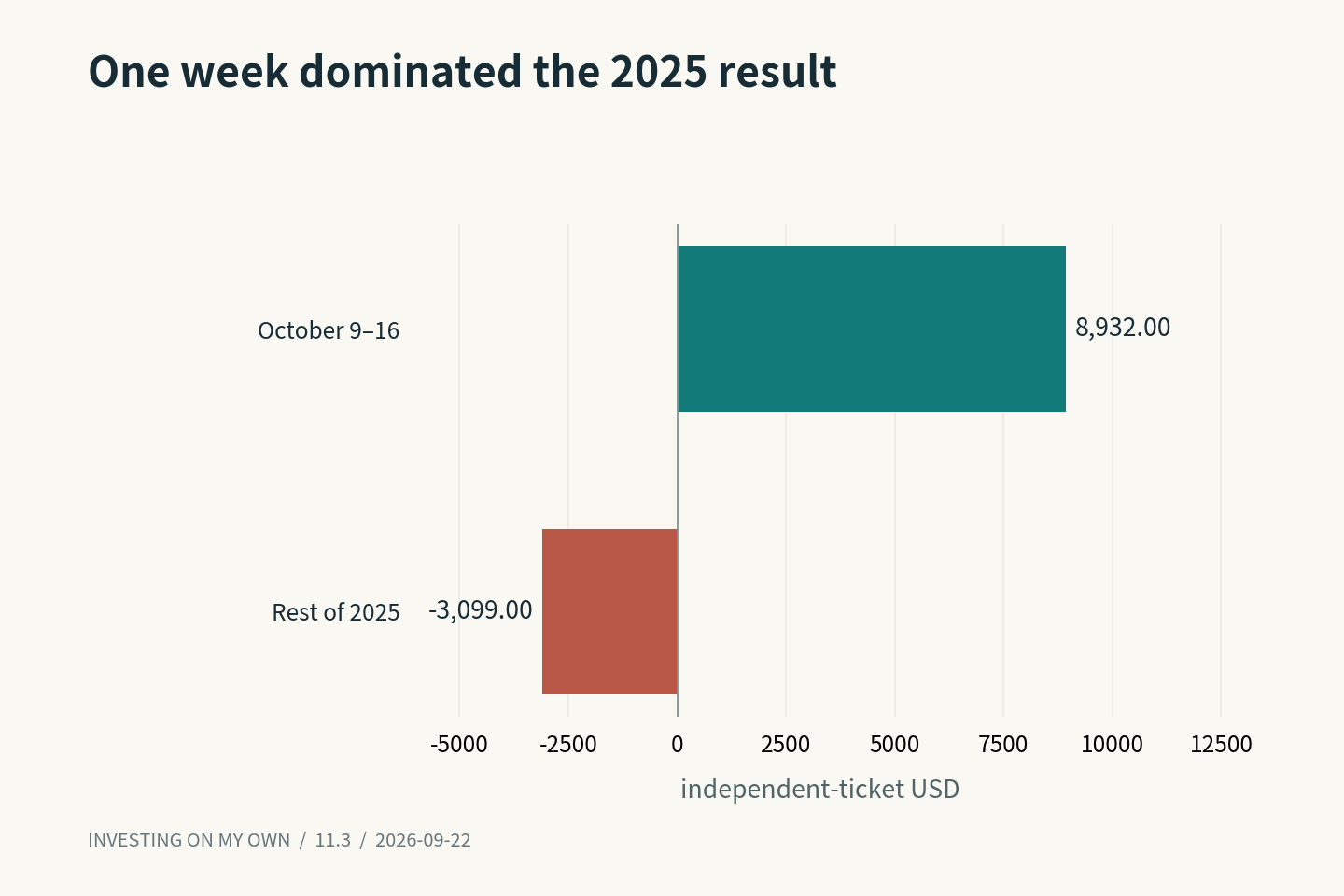
The concentration of the 2025 gains was especially important. Removing the 471 trades during October 9–16 left the rest of the year with a negative 1.34% mean return and a profit factor of 0.87.
A diagnostic assigning an independent $100 ticket to every trade attributed approximately $8,932 of gains to that week and a $3,099 loss to the remainder. This was not the return of an account sharing finite capital across overlapping trades. It was a way to show concentration.
The surge detector was not entirely uninformative. In one diagnostic, the probability of rising 50% within a day before first falling 10% was 6.10% among signals versus 1.75% in the comparison group.
But identifying situations with a higher chance of an extreme rise was not the same as generating a profitable trading account. Small losses, delayed entry, intermediate stops, and funding could overwhelm the occasional large winner.
This distinction was easy to miss when looking at the most dramatic candles. A chart could correctly show that the detector found unusual activity while still saying very little about whether the chosen execution rule made money.
🧯 Shorting was not a comfortable opposite
A coin that has risen a great deal may eventually fall, but it can rise much further first. For a short position, the intervening path matters. An eventual decline does not establish that the position could survive until then.
Funding needed separate treatment as well. I checked whether the favorable price move covered payments during the holding period and whether the futures contract actually existed at entry. An older spot chart did not make an earlier futures short available.
I tried to obtain finer historical quote data, but some one-minute quote endpoints returned 404. That left part of the work as a candle-based study, not an executable-order-book reconstruction. I did not fill the missing observations with invented quotes.
The final research bundle did not select an operational candidate. Some of the poor test period had already been observed in earlier work, so the follow-up could not be described as a fresh untouched evaluation either.
Starting with two well-known coins led me toward hundreds of less memorable contracts and the periods that did not work. I could not remove the hindsight involved in choosing the original examples. I could at least make that limitation visible, and avoid turning a retrospective question into an invented story of foresight.
Previous · Series index · Next